Why Remote Drafters and BIM Specialists Are the Future of Architecture
The architecture industry is experiencing a fundamental transformation in how firms build and manage their technical teams. Remote drafters and BIM specialists have emerged as essential resources for design practices across North America and Europe. This shift represents more than a temporary trend. It signals a permanent evolution in how architectural services are delivered in the digital age.
The Rise of Remote Architectural Jobs
Traditional architecture firms once required every team member to work from a central office. That model has been shattered by technological advances and changing workforce expectations. Remote architectural jobs now account for a significant portion of new positions in the design industry.
Firms in cities like San Francisco and Boston, and Toronto are discovering they can access superior talent by removing geographic restrictions. A small practice in Austin can now hire a Revit expert based in Portland without relocation costs or delays.
The availability of remote architectural jobs has expanded the talent pool exponentially. Professionals who left major metro areas during recent years remain valuable contributors through remote arrangements. This geographic flexibility benefits both employers seeking skilled workers and professionals wanting lifestyle flexibility.
BIM Freelance Jobs Transform Project Delivery
Building Information Modeling has become the standard for modern architectural documentation. The demand for BIM freelance jobs has surged as firms recognize they don’t need full-time specialists for every project phase.
Remote drafters and BIM specialists working on a freelance basis provide expertise exactly when needed. A healthcare facility project might require clash detection specialists for three months. A residential developer might need someone to create detailed door and window schedules for two weeks.
BIM freelance jobs allow professionals to work with multiple firms simultaneously. A specialist might support a commercial project in Chicago while also contributing to a mixed-use development in Miami. This diversity of experience makes freelance BIM professionals increasingly valuable to the industry.
The freelance model also helps firms manage overhead costs. Instead of maintaining full-time salaries and benefits during slow periods, you can scale technical support based on actual project demands.
Remote BIM Specialists Deliver Consistent Quality
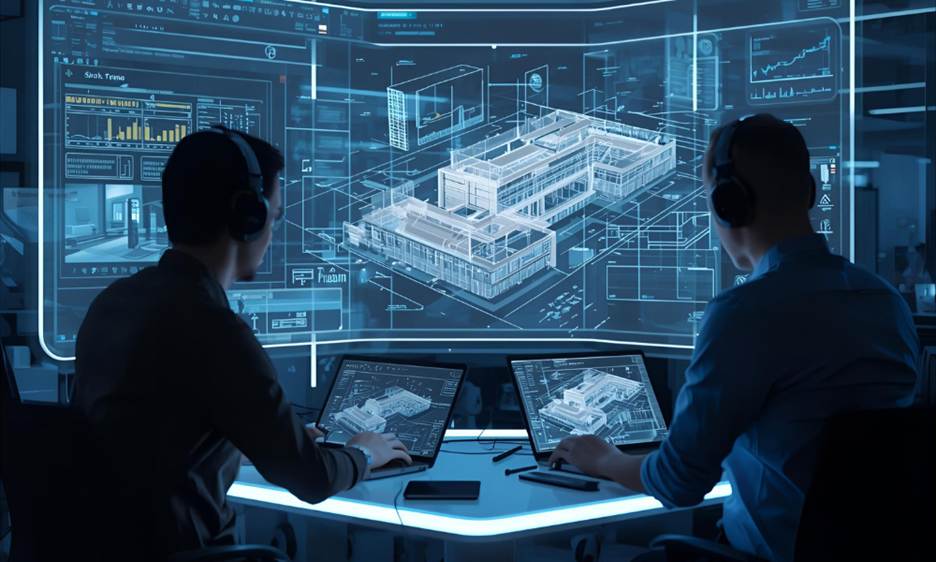
One concern firms initially had about remote work centered on quality control. Experience has proven that remote BIM specialists often produce superior work compared to their in-office counterparts.
Remote BIM specialists typically work in distraction-free home offices. Without constant interruptions, they can focus deeply on complex modeling tasks. The result is fewer coordination errors and more detailed construction documentation.
These professionals also tend to maintain cutting-edge software skills. Remote BIM specialists invest in continuous learning because their marketability depends on technical expertise. They master the latest Revit features and Navisworks workflows, and BIM 360 collaboration tools.
Firms in Seattle and Denver report that remote BIM specialists complete tasks 20 to 30 percent faster than previous in-house teams. The combination of focused work environments and advanced skills creates measurable productivity gains.
Virtual Architecture Services Expand Firm Capabilities
Virtual architecture services encompass much more than basic drafting. Remote drafters and BIM specialists now handle complex design development and construction administration, and facility management documentation.
A small firm with three principals can compete for large institutional projects by leveraging virtual architecture services. They maintain creative control and client relationships while remote teams handle technical production. This model allows boutique practices to punch above their weight class.
Virtual architecture services also provide specialized expertise that would be impractical to maintain internally. Need someone experienced in Grasshopper for parametric facade design? A remote specialist can join your team for that specific project phase.
The scalability of virtual architecture services helps firms manage risk during economic uncertainty. You can expand technical capacity rapidly when work flows in and reduce it quickly if projects get delayed.
BIM in Architecture Drives Remote Work Adoption
The integration of BIM in architecture made remote collaboration technically feasible. Cloud-based platforms allow teams spread across multiple time zones to work on the same model simultaneously.
BIM in architecture provides the framework for accountability and quality control in remote teams. Every change is tracked and attributed to specific team members. Project managers can review model progress in real-time regardless of physical location.
The coordination benefits of BIM in architecture become even more pronounced with remote teams. Clash detection identifies conflicts before construction begins. This prevents costly field changes, whether your team is in the same building or scattered across three continents.
Firms that have fully embraced BIM in architecture find remote team integration nearly seamless. The technology infrastructure required for effective BIM collaboration naturally supports distributed teams.
Geographic Advantages of Remote Drafters and BIM Specialists
Hiring remote drafters and BIM specialists allows firms to optimize for both talent quality and cost efficiency. A practice based in New York City can hire exceptional professionals living in Nashville or Raleigh, where living costs are substantially lower.
This geographic arbitrage benefits everyone involved. The firm accesses premium talent at sustainable rates. The professional enjoys a higher quality of life with the same or better income. Remote architectural jobs create win-win scenarios that weren’t possible in the traditional model.
Time zone diversity also creates operational advantages. A firm in Los Angeles can have remote drafters and BIM specialists in East Coast locations handling morning coordination. Then West Coast team members pick up afternoon tasks. This extended workday accelerates project timelines significantly.
Future Outlook for Remote Technical Teams

The trend toward remote drafters and BIM specialists will accelerate through 2026 and beyond. Younger professionals entering the field expect remote work options. Firms that insist on full-time office presence will struggle to attract emerging talent.
Technology continues to improve the remote work experience. Virtual reality design reviews and AI-assisted modeling and enhanced collaboration platforms make distance increasingly irrelevant. Remote architectural jobs will become indistinguishable from traditional positions in terms of integration and output quality.
Forward-thinking firms are already building hybrid models that combine small core teams with flexible networks of remote drafters and BIM specialists. This approach provides stability while maintaining agility. The practices that master this balance will dominate their markets for years to come.
FAQ
1. Who are remote drafters and BIM specialists?
Remote drafters and BIM specialists are professionals who work remotely to create detailed architectural and engineering drawings and 3D Building Information Models using specialized software like Revit and AutoCAD.
2. What kind of remote architectural jobs are available?
Remote architectural jobs include drafting, 3D modeling, BIM coordination, design development, project visualization, and preparation of construction documents.
3. What are BIM freelance jobs?
BIM freelance jobs involve creating accurate and interactive 3D models of buildings, managing model coordination, clash detection, and assisting with project planning on a contract or project basis.
4. What services do remote BIM specialists provide?
Remote BIM specialists offer services such as detailed 3D modeling, quantity take-offs, clash detection, MEP coordination, and energy analysis to support architectural and engineering projects.
5. How is BIM used in architecture?
BIM (Building Information Modeling) in architecture integrates architecture, engineering, and construction data into a digital 3D model to enhance design accuracy, improve collaboration, and streamline project delivery